Across Europe, in-store and online shopping have stopped competing and started complementing each other. A new Instacart-commissioned survey of more than 2,700 grocery customers across France, Germany, Italy, Spain and the UK finds 61% of European consumers regularly split their shopping between both channels. The hybrid customer is the new default.
Personalisation is now a baseline expectation
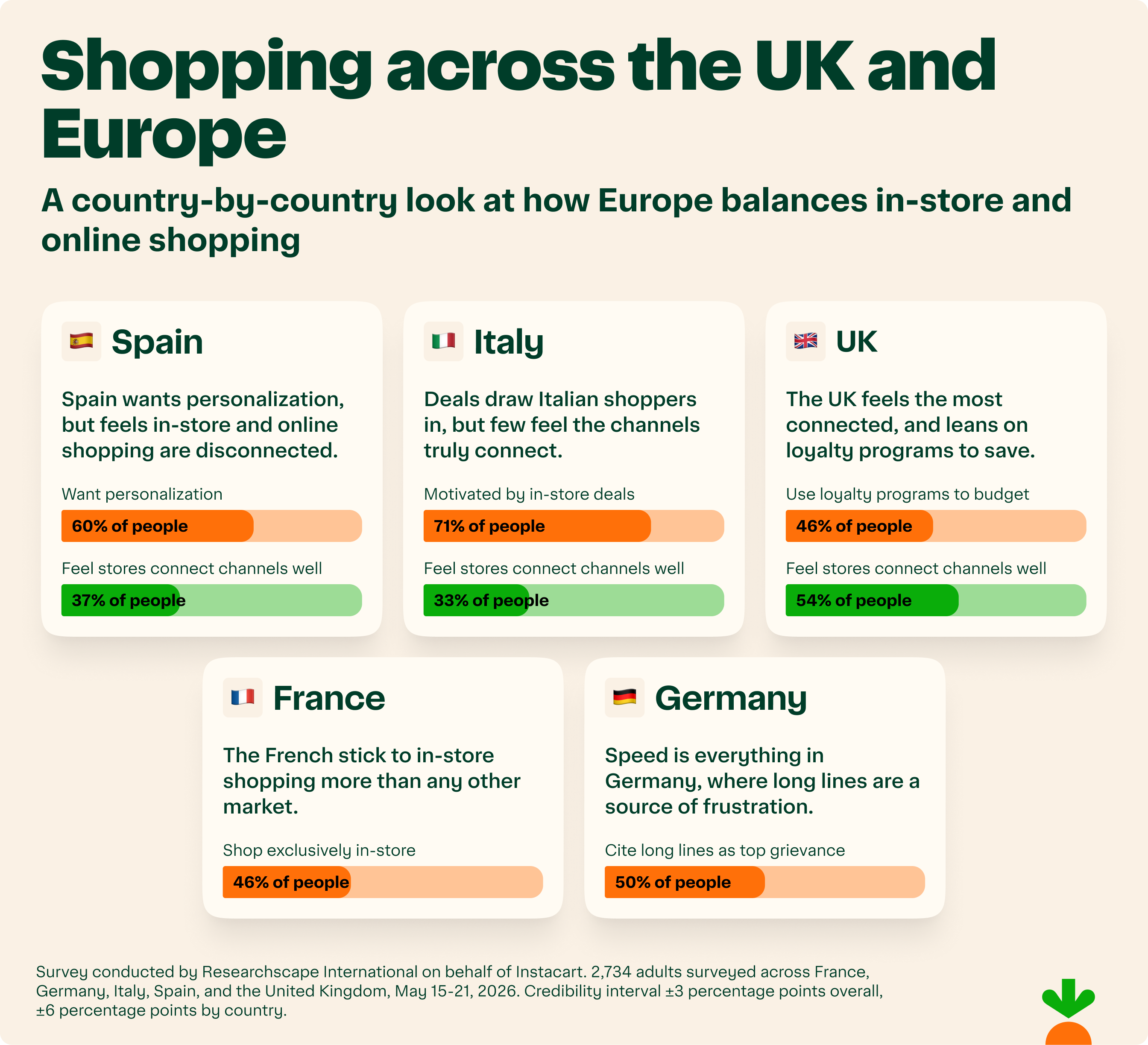
Nearly half of Europeans (47%) say personalisation is very or extremely important - whether shopping online or in-store. The demand is especially pronounced in markets like Spain, where 60% say it's very or extremely important that their supermarket personalises across both channels, and the UK, where 46% of respondents named shop loyalty programmes as their top budgeting tool.
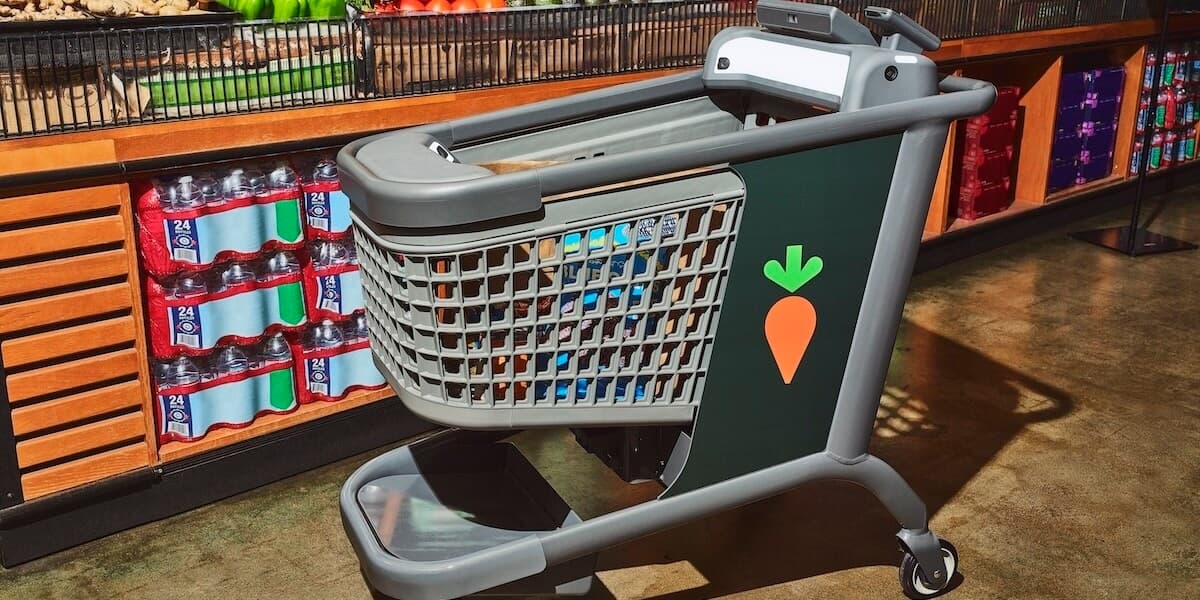
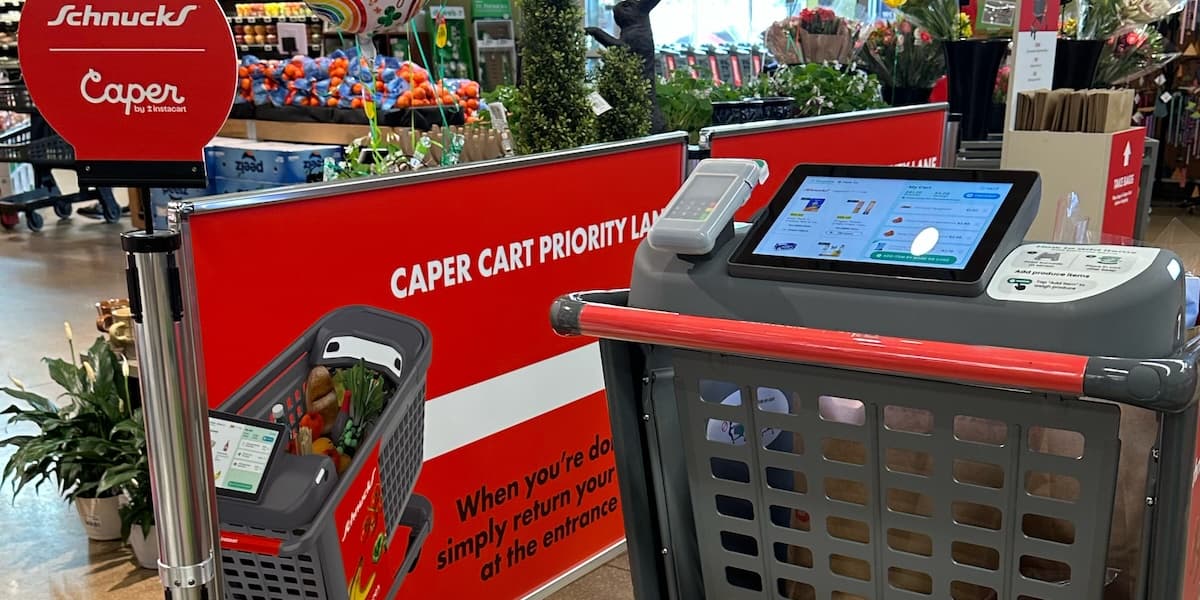
The challenge is that personalisation is well-established online. Bringing that same relevance into the physical shop has been harder - and that's exactly what Instacart's Storefront Pro and Caper smart trolleys are built for. Instacart has spent more than a decade building the technology foundation that allows retailers to operate in an omnichannel world, spanning ecommerce, in-store technology and AI. Storefront Pro powers a retailer's branded online experience with AI-driven personalisation, while Caper brings that same intelligence into the physical aisle - tracking spend in real time, surfacing relevant promotions, and connecting to retailers' loyalty programmes.
In-store wins on discoverability
When customers shop in person, they find more than they came for. More than three in five (62%) value easily locating their regular purchases, and nearly half (45%) discover products they weren't originally looking for - rising to 54% in the UK - the kind of in-store serendipity that drives larger baskets for retailers.
Online delivers a different but equally valuable experience. Digital-leaning customers get something the shop can't always offer: a personalised, pressure-free browse built around their habits and preferences. It's no surprise that customers are more likely to feel unhurried online than in-store (49% vs. 41%).
Technology adoption comes down to value
When asked what would most motivate them to adopt new in-store technology, customers were direct:
“Helps me save money” - the top answer across all five countries
“Makes my shopping trip faster” - a close second
Customers are open to innovation when it solves a real problem - and grocery budget anxiety is a very real one. Nearly half of European customers (45%) have abandoned grocery items at the till because they weren't sure they could afford them, rising to 53% in the UK and 55% in Germany. Real-time spend tracking, like the running total on Caper, addresses that anxiety before it becomes an abandoned basket.
How it breaks down by country
The omnichannel retailer will win
European grocery customers have settled into a hybrid rhythm that works for them. The retailers who earn their loyalty will be the ones who meet them in both places - connecting loyalty programmes, promotions, and product discovery seamlessly, whether a customer is on their phone or in the aisle.
*Survey conducted by Researchscape International on behalf of Instacart. 2,734 adults surveyed across France, Germany, Italy, Spain and the United Kingdom, 15-21 May 2026. Credibility interval ±3 percentage points overall, ±6 percentage points by country.*